


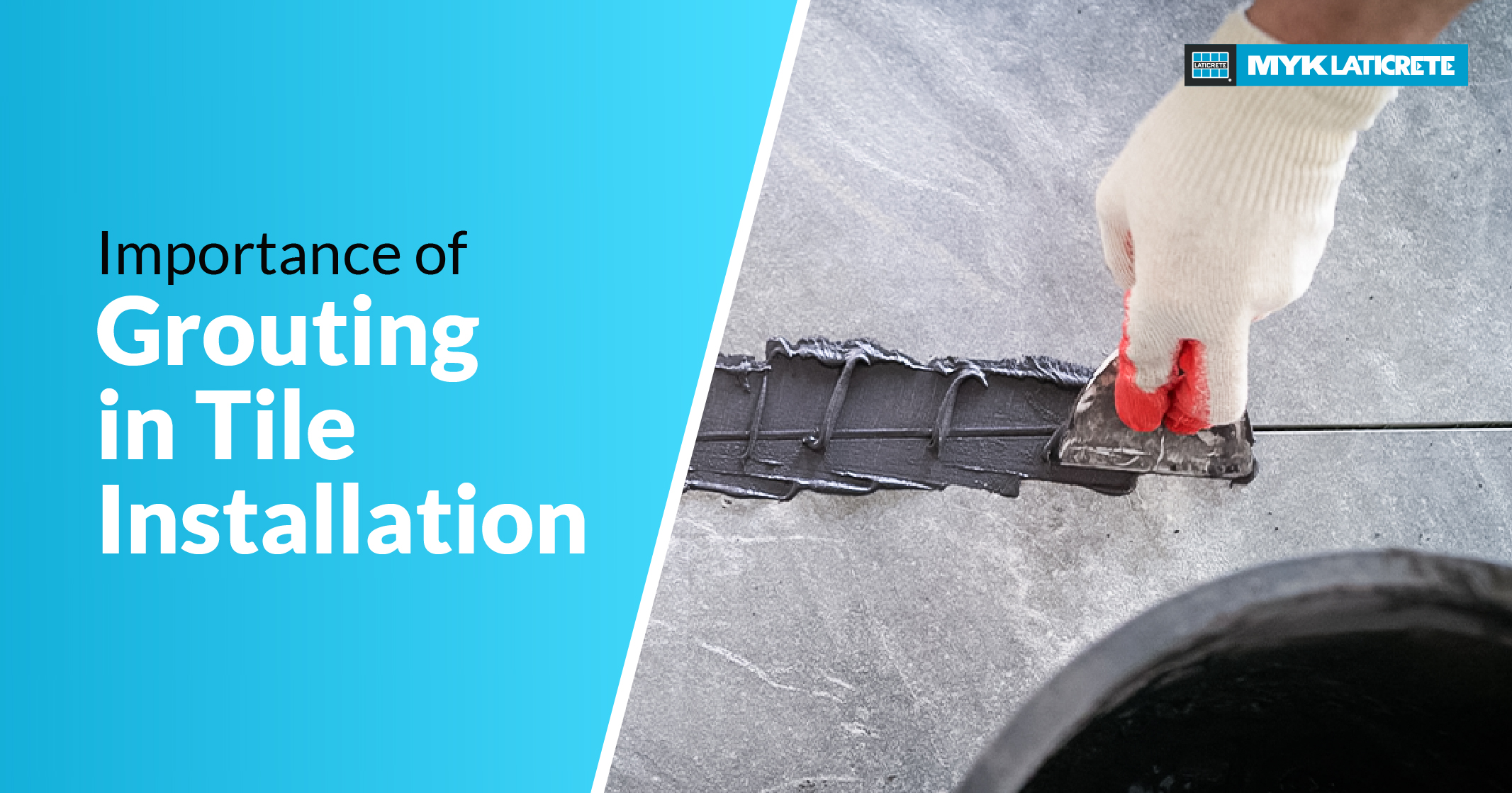
Ever felt that the floor under your feet just doesn’t feel right? The tiles may be installed, but the tile system is not protected. Imagine tiles as bricks and grout as the mortar that holds the wall together. It is a small detail that protects the entire tile installation. Without grout, every tile is like a separate piece sitting next to another. Water can slip through the gaps, dust can settle inside, the edges can chip, and the tile system can slowly weaken.
That’s why it is essential to seal your tiles with proper grouting. This guide will cover everything you need to know about the importance of grouting in tile installations.
What is Grouting?
Grouting is the process of filling the gaps, or joints, between tiles after they are installed. Once tiles are fixed with adhesive or mortar, small spaces are left between them. These spaces are not accidental. They allow for slight movement, alignment correction and a clean finish. Grout is the material used to fill these spaces and make the tile installation last longer. In simple terms, Tile adhesive fixes the tile to the surface. Grout fills the space between tiles.
Key Benefits of Using Tile Grouting
Even expensive imported Italian tiles can look shabby if not grouted properly. Grouting is necessary for multiple reasons.
1. Enhances Durability and Longevity
Grouting protects the tiles from loosening over time and prevents dust and dirt from entering the joints. It supports the tile edges, which can crack easily if left exposed. Proper grouting reduces the overall risk of damage by sealing the gaps and strengthening the joints.
2. Provides Aesthetic Appeal
Grouting gives the tiled surface a neat, clean and intentional finish. It also enhances the overall aesthetics by defining the tile pattern, such as subway tiles or a mosaic pattern. Using coloured grouting can add character to the tiles by giving them contrast. For example:
- White grout with dark tiles creates a bold, modern contrast.
- Matching grout with similar-coloured tiles gives a seamless, spacious look.
- Grey grout with light tiles offers a balanced and practical finish.
You can check out Dazzle for adding a sparkling finish to your tile installation.
3. Improves Moisture Resistance
Grouting improves moisture resistance by sealing the open joints between tiles. When moisture enters through unfilled or cracked joints, it can weaken the tile adhesive underneath. Over time, this may cause hollow sounds, loose tiles or debonding. Proper grouting helps protect this hidden layer and protects the surface from mould and fungus caused by moisture.
Applications of Grouting in Construction
Grouting has multiple use cases. Grout acts as a water guard in bathrooms, a hygiene barrier in a kitchen and as a shock absorber between floor tiles.
1. Floor Grouting
Using grouting in flooring helps to:
- Fill the joints between floor tiles.
- Protect tile edges from chipping under foot traffic.
- Improve load distribution between tiles.
- Reduce the risk of loose or hollow tiles.
- Give the flooring a neat, finished appearance.
2. Bathroom Grouting
In bathrooms, grouting is especially important because the area is exposed to water and moisture every day. It is necessary to:
- Reduce water seepage into the tile bed.
- Protect the adhesive and waterproofing layer below.
- Prevent mould and fungus growth in tile joints.
- Keep bathroom walls and floors easier to clean.
- Improve moisture resistance in wet areas.
3. Kitchen Grouting
Kitchen tiles are constantly exposed to oils, stains and food residue. Grouting adds protection by:
- Smoothening the surface, making cleaning easier.
- Reduce staining by filling the gaps around tile edges.
- Prevent water from entering joints near sinks and counters.
- Food Grade certified grouts are recommended
Types of Grout and Suitable Applications
There are various types of grout available for suitable application. The main types include:
1. Cementitious grout
Cementitious grout is the most commonly used grout. It is made using cement, fillers, pigments and additives. It is suitable for regular residential floors and walls.
Best used for:
- Living room floors
- Bedroom floors
- Drywall tiles
- General indoor tile work
2. Sanded grout
Sanded grout is a cement-based grout with fine sand added to it. The sand gives it better strength and reduces shrinkage in wider joints.
Best used for:
- Wider tile joints
- Floor tiles
- Outdoor flooring
- Ceramic and vitrified tiles with wider spacing
3. Unsanded grout
Unsanded grout is smoother and does not contain sand. It is better for narrow joints and delicate tile surfaces. Choose this when the tile joints are very thin or the tile surface is sensitive to scratching.
4. Epoxy grout
Epoxy grout is made from epoxy resins and hardeners. It is highly resistant to water, stains, chemicals and bacteria.
Best used for:
- Bathrooms
- Kitchens
- Shower areas
- Swimming pools
- Commercial kitchens
- Hospitals
- High-hygiene spaces
- Areas exposed to oil, chemicals or frequent cleaning
- Balconies
- Terrace (Special UV Resistant grouts)
5. Polymer-modified grout
Polymer-modified grout is cementitious grout improved with polymer additives. It offers better flexibility, adhesion, water resistance and durability than basic cement grout. Choose this when you want better performance than normal cement grout without moving fully to epoxy grout.
How to Choose the Right Grout?
Grout is selected based on tile type, joint width, location, moisture exposure, stain risk and maintenance needs. The right grout improves durability, hygiene and finish. The wrong grout can lead to cracks, stains, seepage or early repairs. Follow these steps to select the perfect grout:
1. Check the location
2. Check the joint width
3. Check moisture exposure
4. Check stain risk
5. Check the tile type
6. Check maintenance expectations
Right Way to Apply Grout
Applying the grout properly matters as much as choosing the right one. If not done the right way, the overall effectiveness of grouting can be impacted. Grouting should be applied in the following steps:
1. Let the tile adhesive cure first: Do not grout immediately after fixing tiles. The tile adhesive or mortar should be properly set before grouting begins.
2. Clean the tile joint: Remove dust, cement particles, tile spacers and debris from joints before filling grout. The joints should be clean and evenly open. If dirt remains inside, the grout may not bond properly.
3. Mix the grout correctly: Follow the grout in exact ratios as instructed by the manufacturer. The grout mix should be smooth, lump-free and workable, like a thick paste.
4. Apply grout diagonally across the joints: Apply grout diagonally across the tile lines using a rubber grout float to press the grout into the joints.
5. Remove excess grout from the tile surface: Once the grouting is complete, remove all excess using a float.
6. Clean with a damp sponge: After the grout begins to firm up slightly, clean the tile surface gently with a damp sponge in circular or diagonal motions, rinsing the sponge frequently.
7. Shape and finish the joints: The grout lines should look even, smooth and slightly recessed or level, depending on the desired finish.
8. Allow proper curing: Follow the recommended curing time, usually 24 to 72 hours, depending on the grout type. Protect the area from dust and foot traffic during curing.
9. Seal cement grout if required: Some cementitious grouts may need sealing, especially in bathrooms, kitchens and stain-prone areas. Sealing improves resistance to water, stains and dirt. Epoxy grout usually does not need sealing.
Conclusion
Grouting may look like a small finishing step, but it plays a major role in the strength, hygiene and appearance of any tile installation. It extends the life of your installation by sealing everything in place.
MYK LATICRETE offers high-quality grout solutions designed for different tile types, spaces and performance needs. Explore the tile grout range to find a reliable solution for durable, stain-resistant and long-lasting tile installations. To learn more, visit https://myklaticrete.com/products/epoxy-tile-grout/.




